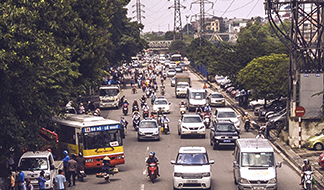
Every day around the world, people who walk and cycle are navigating streets that have not been planned, designed, and built with their safety as a priority. Children, families, and community members are exposed to dangerous realities—high speeds, lack of footpaths, crossing points, and designated bicycle paths—that put their lives and everyday life at risk.
We have accepted unsafe and unsustainable streets as normal and inevitable, even though we know the proven, cost-effective solutions to fix them.
Therefore, the Global Alliance of NGOs for Road Safety (the Alliance) and its members set out to shine a light on this often-overlooked reality of people’s daily journeys by collecting local data. These data, known as Mobility Snapshots, show the realities of how unsafe our streets are and the solutions that can make our communities more livable and sustainable, enabling access to education, work, and the choices that allow us all to achieve our maximum potential, leaving no one behind.
Click on the links below to explore our Mobility Snapshots and be part of the street transformations in your community by developing your own Mobility Snapshot.
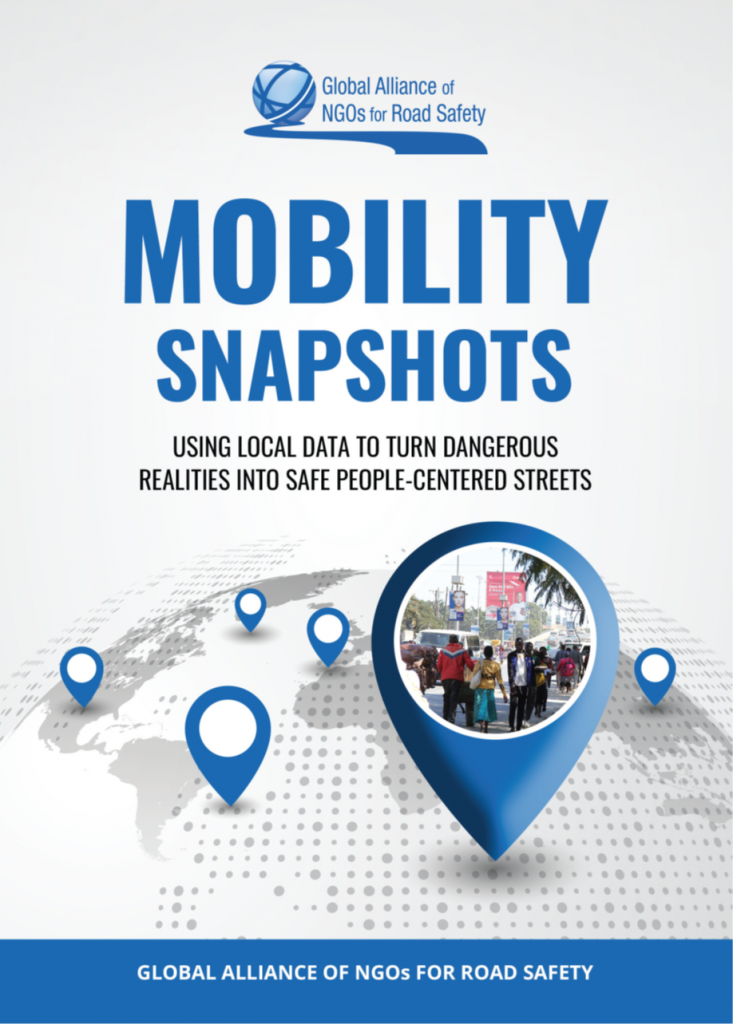
Our publication (2024) presents key findings from data collected at 118 intersections across 44 countries and calls for solutions proven to protect pedestrians.

Road safety advocates are using Mobility Snapshots to show the reality of specific intersections in their local streets. Together with our members, we are growing the number of Mobility Snapshots. Explore the Mobility Snapshots around the world in the map and join the movement as we build a global picture of the realities faced by pedestrians and cyclists.

Let’s grow our demand for safe streets for all by collecting data on our local streets. This data-driven advocacy is vital for achieving the global road safety target to halve deaths and serious injuries by 2030.

Discover inspiring stories from our road safety advocates who are transforming streets through their Mobility Snapshots. Learn how their data-driven advocacy is creating safe, sustainable, and accessible streets for all.
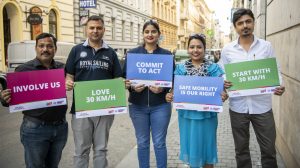
Mobility Snapshots focus on proven solutions (Priority Interventions) to protect those most at risk—pedestrians and cyclists. These interventions are vital in ensuring road environments that prioritize safety, reduce crash severity, and support healthy, sustainable, equitable mobility. They reflect the priorities identified by the Alliance member NGOs in their countries and build on the momentum created by earlier advocacy efforts, including the Streets for Life #Love30 campaign.
Implementation of evidence-based interventions results in reductions of deaths and injuries, and over time, “halving road crash deaths and injuries could generate additional flows of income, with increases in GDP per capita”(World Bank. (2017). The High Toll of Traffic Injuries: Unacceptable and Preventable. World Bank).